Nurturing Social and Emotional Learning(SEL) For Educators
Home Page
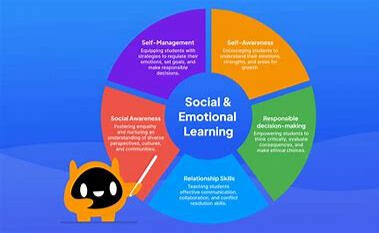
Welcome to the Nurturing SEL website, dedicated to helping educators understand the importance of social and emotional learning in the classroom. Here, you'll find resources discussing the impact of early development and concrete strategies for fostering SEL at various developmental stages.
The Impact of Early Development on Social/Emotional Growth
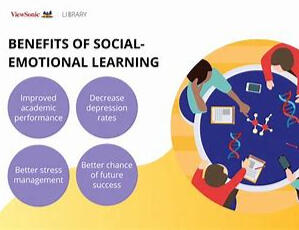
Prenatal development and early childhood experiences lay the foundation for future social and emotional growth. During prenatal development, factors such as maternal health, nutrition, and stress levels can significantly affect a child's brain development. Positive prenatal care can lead to better outcomes in emotional regulation, attachment, and resilience(Center on the Developing Child at Harvard University, 2021).
Early childhood experiences, such as secure attachments with caregivers, exposure to rich language environments, and opportunities for play, are crucial. These factors shape a child’s ability to form relationships, cope with emotions, and navigate social situations as they grow into adolescence and beyond (Shonkoff, J. P., & Phillips, D. A. (Eds.), 2000) .
Developmental stages and Milestones
1. Infancy (0-12 months)
- Milestones: - Establishment of trust through consistent care.
- Development of basic attachment to caregivers. - Beginning of emotional responses like joy and distress.
- Strategies/Activities: - Responsive Caregiving: Consistently responding to a baby’s cues fosters trust and emotional security.
- Interactive Play: Use toys that encourage sensory exploration and bonding, like soft toys or rattles, to promote emotional connections.
2. Toddlerhood (1-3 years)
- Milestones: - Development of self-awareness (e.g., recognizing oneself in a mirror). - Beginning of emotional regulation (e.g., expressing frustration verbally instead of through tantrums). - Forming attachments and relationships with peers.
- Strategies/Activities: - Emotion Naming Teach toddlers to identify and label their emotions using simple words and picture charts.
- Modeling Coping Skills: Show toddlers how to take deep breaths or use words to express feelings when upset.
3. Middle Childhood (6-12 years)
- Milestones: - Increasing ability to understand and empathize with others. - Developing a sense of self and self-esteem. - Enhancing social skills such as cooperation and conflict resolution.
- Strategies/Activities: - Group Activities: Engage students in cooperative games that foster teamwork and communication.
- Journaling: Encourage students to write about their day, focusing on feelings and interactions, helping them reflect on their emotions(American Academy of Pediatrics, 2019).
Understanding Self-regulation

Definition: Self-regulation refers to an individual's ability to manage their thoughts, emotions, and behaviors in a situational context. It’s crucial for academic success and social interactions (Zins, J., Bloodworth, M., Weissberg, R., & Walberg, H.; 2004) .
Examples: - A student who recognizes they are becoming frustrated and takes a moment to breathe before responding. - A child who can wait their turn during a group activity instead of interrupting.
Encouraging Self-Regulation in the Classroom:
1. Modeling Behavior: Teachers can demonstrate self-regulation by expressing their feelings openly and showing how to handle them constructively.
2. Classroom Routines: Establishing clear routines helps students understand expectations and develop self-discipline over time.
3. Mindfulness Exercises: Incorporate short mindfulness practices to help students develop awareness of their emotions and improve self-control.
Support For Families
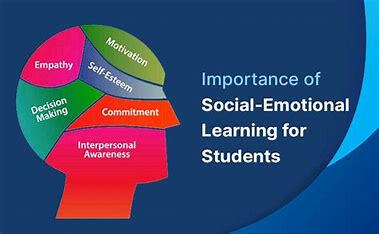
Tips for Home:
- Establish a Routine: Consistent daily routines provide children with a sense of security and ability to self-regulate.
- Encourage Open Communication: Create an environment where children feel safe expressing their feelings and thoughts without judgment.
- Practice Mindfulness Together: Engage in simple mindfulness exercises as a family, such as breathing techniques or nature walks, to help children understand their feelings.
Together, we can support children’s social and emotional development through intentional practices in both classroom and home environments(zero to three).
Contact Us
For more information, questions, or suggestions, feel free to reach out to us at
Email:[[email protected]]
Phone:[929-290-8138].
Reference Page
[Link to additional articles, books, and SEL resources for educators]
National Research Council (US) and Institute of Medicine (US) Committee on Integrating the Science of Early Childhood Development, Shonkoff, J. P., & Phillips, D. A. (Eds.). (2000). From Neurons to Neighborhoods: The Science of Early Childhood Development. National Academies Press (US).
Zubler, J. M., Wiggins, L. D., Macias, M. M., Whitaker, T. M., Shaw, J. S., Squires, J. K., Pajek, J. A., Wolf, R. B., Slaughter, K. S., Broughton, A. S., Gerndt, K. L., Mlodoch, B. J., & Lipkin, P. H. (2022). Evidence-Informed Milestones for Developmental Surveillance Tools. Pediatrics, 149(3), e2021052138. [https://doi.org/10.1542/peds.2021-052138]
Zins, J. E., Bloodworth, M. R., Weissberg, R. P., & Walberg, H. J. (2007). The scientific base linking social and emotional learning to school success. Journal of Educational & Psychological Consultation, 17(2-3), 191–210. https://doi.org/10.1080/10474410701413145